

A brighter smile sounds simple until you start thinking about how bright you actually want to go. Most people do not want their teeth to look dull or stained, but they also do not want a shade that looks too stark, flat, or out of place. The goal is usually something more natural: teeth that look clean, healthy, and brighter without making the smile feel like it belongs to someone else.
That is where professional guidance helps. Teeth whitening is not about preordering an exact shade from a chart. Your natural tooth color, enamel thickness, staining patterns, existing dental work, sensitivity level, and daily habits all affect how your teeth respond. A shade that looks natural for one person may look too bright or too muted on another.
At Springhurst Hills Dentistry in Louisville, KY, Dr. Lan Tran helps patients understand what whitening can realistically do and how to recognize a result that looks balanced. Professional teeth whitening can lift stains and brighten enamel, but the best outcome starts with a practical conversation about your goals, your starting shade, and how much improvement feels right for your smile.
Why the “Whitest” Shade Is Not Always the Best Choice
It is easy to assume that whiter always means better, especially when so many whitening products advertise dramatic results. However, teeth that are too bright for your features can look unnatural. Instead of making the smile look healthier, an overly white shade can draw attention in a way that feels distracting.
Most patients want a brighter smile, but they do not want the kind of blinding white shade that makes teeth look flat or artificial. You may have seen that look before, where the teeth are so bright and opaque that they remind you more of a porcelain toilet bowl than natural enamel. Teeth are not meant to look that way. A good whitening result still has some depth and softness, so the smile looks cleaner, healthier, and natural.
This is why many patients do best with a shade that is a few steps lighter than where they started, rather than chasing the brightest possible result. A noticeable improvement can make the smile look fresher without creating a harsh contrast with the lips, gums, or surrounding teeth.
Dr. Lan Tran can help you compare your starting shade with your whitening results and decide whether the change feels right. That conversation matters because the goal is not just lighter teeth. It is a smile that still looks like you.
Your Natural Tooth Color Sets the Starting Point
Everyone starts from a different base shade. Some teeth naturally lean more yellow, while others have gray, brown, or ivory undertones. These undertones affect how teeth respond to whitening and what the final result may look like.
Yellow-toned stains often respond well to professional whitening. These are commonly linked to coffee, tea, red wine, tobacco, or normal aging. Gray or brown tones can be more difficult to lighten, depending on the cause and how deep the discoloration is.
Because of that, two patients can use the same whitening treatment and end up with different results. One person may whiten several shades quickly, while another may need a more gradual approach or may not reach the same level of brightness.
Before whitening, your dentist can look at your current tooth color and explain what kind of change is likely. That helps set expectations early, so you are not measuring success against someone else’s smile.
A Natural-Looking Shade Depends on More Than Brightness
Choosing a whitening result is not only about going lighter. It is also about how the new shade works with the rest of your smile. Tooth shape, gum color, lip line, enamel texture, and any visible dental work can all affect the final look.
For example, a very bright shade may look more noticeable if you show a lot of teeth when you smile. It may also stand out if nearby crowns, fillings, bonding, or veneers do not whiten along with the natural teeth. On the other hand, a softer brightening result may look more natural while still making the smile appear cleaner and fresher.
Age can also play a role. Teeth naturally darken over time, so a moderate whitening change can create a clear improvement without looking abrupt. The goal is not to erase every bit of natural variation, but to brighten the teeth in a way that still feels believable.
A professional whitening consultation gives you a chance to look at your smile as a whole. Rather than focusing only on the lightest possible shade, Dr. Lan Tran can help you think about how the result will look in everyday settings, not just under dental office lighting.
Existing Fillings, Crowns, and Veneers Will Not Whiten
One of the most important things to know before whitening is that dental restorations do not change color like natural teeth. Crowns, veneers, bonding, and tooth-colored fillings stay the same shade during whitening.
This matters if you have visible dental work near the front of your smile. If your natural teeth become lighter but an old crown or filling does not, the restoration may stand out more than it did before. For some patients, this is not a major issue. For others, it may affect the overall result.
That does not mean you cannot whiten if you have dental work. It just means the plan needs to account for it. In some cases, whitening is done first, and then older restorations are updated afterward to better match the new shade.
This is one reason professional whitening is different from grabbing a product off the shelf. Your dentist can identify which teeth will whiten, which restorations will not, and whether any cosmetic updates should be planned after whitening.
Sensitivity Can Influence How Quickly You Whiten
Some patients want to whiten as quickly as possible, but sensitivity may affect the pace. Whitening can temporarily make teeth more sensitive, especially if you already have exposed roots, worn enamel, gum recession, or a history of sensitivity.
Choosing your ideal shade is not only about the final color. It is also about getting there in a way your teeth can tolerate. A slower whitening plan may be better for patients who are prone to sensitivity. In some cases, spacing out treatments or using desensitizing products can help.
If you have sensitive teeth, mention it before whitening starts. Dr. Lan Tran can evaluate whether there are underlying issues that should be treated first and recommend an approach that keeps comfort in mind.
Pushing too aggressively can make whitening feel frustrating. A more controlled plan can still brighten your smile while reducing the chance that sensitivity gets in the way.
Your Lifestyle Affects How Long the Shade Will Last
Your whitening result should also be one you can maintain. Teeth naturally pick up stains over time, especially from coffee, tea, red wine, dark sauces, berries, tobacco, and certain daily habits. If those are part of your routine, your whitening results may fade sooner without touch-ups.
This does not mean you have to give up everything that stains teeth. It does mean maintenance should be part of the conversation. A bright but natural result may be easier to maintain than an extremely light shade that shows new staining quickly.
Good oral hygiene helps, but so do practical habits. Drinking water after coffee or tea, using a straw for certain drinks, keeping up with cleanings, and scheduling touch-ups when needed can all help maintain your result.
During your whitening consultation, it is helpful to be honest about your habits. That allows your dentist to recommend a whitening approach and maintenance plan that fits your actual life.
Professional Whitening Gives You More Control Than Store-Bought Products
Store-bought whitening products can help with mild surface stains, but they do not offer the same level of control. Strips may not fit evenly, trays may be bulky, and results can vary depending on the product and how your teeth respond.
Professional whitening gives you a more guided process. Your dentist can evaluate your teeth, check for cavities or gum concerns, review sensitivity risks, and help you understand what kind of improvement is realistic before treatment begins.
This is especially helpful when you want a result that looks natural. Without guidance, it is easy to over-whiten, whiten unevenly, or miss important details such as visible restorations or white spots.
At Springhurst Hills Dentistry, professional whitening allows patients to work toward a brighter smile with a plan. Instead of guessing from product labels, you can make decisions based on your teeth, your goals, and your dentist’s recommendations.
A Shade Guide Helps Measure Progress
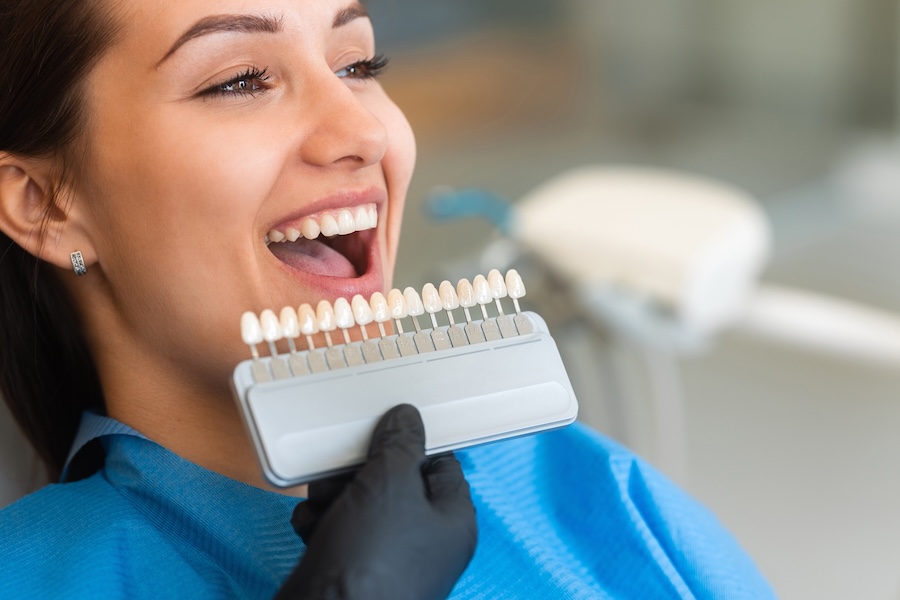
A dental shade guide can help compare where your teeth start and how much they change after whitening. It is useful because whitening results cannot be preordered the way a paint color can. Teeth respond differently based on staining, enamel thickness, natural tooth color, and daily habits.
At your whitening visit, your dental team may record your starting shade and may also take a before photo. After whitening, the shade guide and photos can help show how much brighter your teeth became. From there, you and your dentist can talk about whether the result feels right or whether additional whitening makes sense.
This is also where the conversation stays grounded. The shade guide is not there to pressure you toward the brightest possible square on the chart. It is there to help you see progress, compare changes, and decide whether your smile looks brighter in a way that still feels natural to you.
Using a shade guide as a progress tool also keeps expectations realistic. It is not a promise of an exact final color, but it can be a helpful way to track improvement and decide what comes next.
How to Know When Your Teeth Are White Enough
One of the harder parts of whitening is knowing when to stop. Because changes can happen gradually, it can be tempting to keep going. However, there is a point where more whitening does not necessarily improve the smile.
A good stopping point is usually when your teeth look brighter but still fit your face. They should not appear chalky, overly opaque, or dramatically lighter than any visible dental work. They should also feel comfortable, without ongoing sensitivity that makes eating or drinking unpleasant.
It can help to look at your smile in different lighting. Bathroom lighting, outdoor light, and photos can all make teeth look slightly different. A shade that looks natural across settings is usually a better goal than one that only looks good under certain lighting.
Dr. Lan Tran can help you evaluate the result and decide whether additional whitening makes sense or whether maintenance is the better next step.
Maintaining Your Whitening Results Over Time
Once you reach a result you like, maintenance becomes the focus. Whitening is not permanent because teeth continue to encounter stain-causing foods and drinks. However, good habits can help your results last longer.
Brush twice a day, floss regularly, and keep up with professional cleanings. Cleanings help remove surface buildup that can make teeth look dull. If you drink coffee, tea, or red wine, rinsing with water afterward can help reduce how long pigments sit on the teeth.
Touch-ups may also be recommended depending on the whitening method used and your habits. Some patients need touch-ups every several months, while others can go longer. The timing depends on your starting shade, final result, diet, and oral hygiene.
The goal is to maintain a smile that looks fresh without constantly whitening. A realistic result and a practical maintenance plan can help you do that.
Professional Teeth Whitening in Louisville, KY at Springhurst Hills Dentistry
If you are thinking about professional teeth whitening, choosing your ideal shade is really about choosing a result that looks natural, feels comfortable, and fits your smile. The right result should brighten your teeth without making them look too stark or out of place.
At Springhurst Hills Dentistry in Louisville, KY, Dr. Lan Tran helps patients understand what whitening can do, how shade guides are used to track improvement, and how to maintain results after treatment. Whether you want a subtle refresh or a more noticeable change, a professional consultation can help you avoid guesswork.
If you are ready to brighten your smile, schedule a whitening consultation with Springhurst Hills Dentistry. You can review your starting shade, talk through your goals, and choose a whitening plan that feels right for your smile.
FAQs
Can I choose an exact whitening shade before treatment? Not exactly. A shade guide can help track your starting point and measure improvement afterward, but whitening results cannot be preordered like a paint color. Your final result depends on your natural tooth color, staining, enamel, and how your teeth respond.
Can teeth look too white after whitening? Yes, teeth can look too white if the result is much brighter than your natural features or visible restorations. This can make teeth look flat, overly opaque, or artificial rather than naturally healthy. Most patients are happier with a brighter smile that still has some depth and softness.
Will crowns or fillings whiten with my natural teeth? No, crowns, veneers, bonding, and tooth-colored fillings do not whiten like natural enamel. If they are visible, your dentist may recommend whitening first and then updating restorations if needed to better match the new shade.
How long do professional whitening results last? Whitening results often last several months to about a year, depending on your habits, oral hygiene, and maintenance. Coffee, tea, red wine, tobacco, and dark-colored foods can stain teeth again over time.
What if I have sensitive teeth? You may still be able to whiten, but your dentist may recommend a gentler approach, shorter treatment times, or desensitizing products. It is also important to check for cavities, gum recession, or enamel wear before whitening.
Is professional whitening better than store-bought whitening? Professional whitening offers more guidance, better progress tracking, and a dental exam before treatment begins. Store-bought products may help with mild stains, but they do not account for restorations, sensitivity risks, or uneven discoloration.
Posted on behalf of Dr. Lan Tran, Springhurst Hills Dentistry

Contact us today to see how we can help you and your family get healthy smiles!
Send Us An Email